Restorative Dentistry
Restorative Dentistry
How digital dentistry improves patient care
How digital dentistry improves patient care
The field of dentistry has undergone a remarkable transformation in recent years, driven by rapid advances in digital technology. What was once a world of physical impressions, film X-rays, and manual laboratory work has evolved into a streamlined, precise, and patient-centered experience. Digital dentistry encompasses a wide range of technologies—intraoral scanners, 3D imaging, computer-aided design and manufacturing (CAD/CAM), digital treatment planning, and artificial intelligence-assisted diagnostics.
The field of dentistry has undergone a remarkable transformation in recent years, driven by rapid advances in digital technology. What was once a world of physical impressions, film X-rays, and manual laboratory work has evolved into a streamlined, precise, and patient-centered experience. Digital dentistry encompasses a wide range of technologies—intraoral scanners, 3D imaging, computer-aided design and manufacturing (CAD/CAM), digital treatment planning, and artificial intelligence-assisted diagnostics.
Understanding the digital dental experience
Walking into a modern dental practice today is notably different from even a decade ago. Digital impressions replace the gag-inducing trays of goopy impression material. Chairside screens display high-resolution images of your teeth, allowing you to see exactly what your dentist sees. Treatment plans are simulated in 3D so you can preview your results before treatment begins. These technologies work together to create a seamless, efficient workflow that benefits both the dental team and the patient. Digital dentistry reduces appointment times, enhances accuracy, and minimizes the need for multiple visits. The experience is more comfortable, transparent, and collaborative, giving patients greater involvement in their care decisions.
Digital dentistry isn't just new technology—it's a better standard of care.
Precision diagnostics with 3D imaging
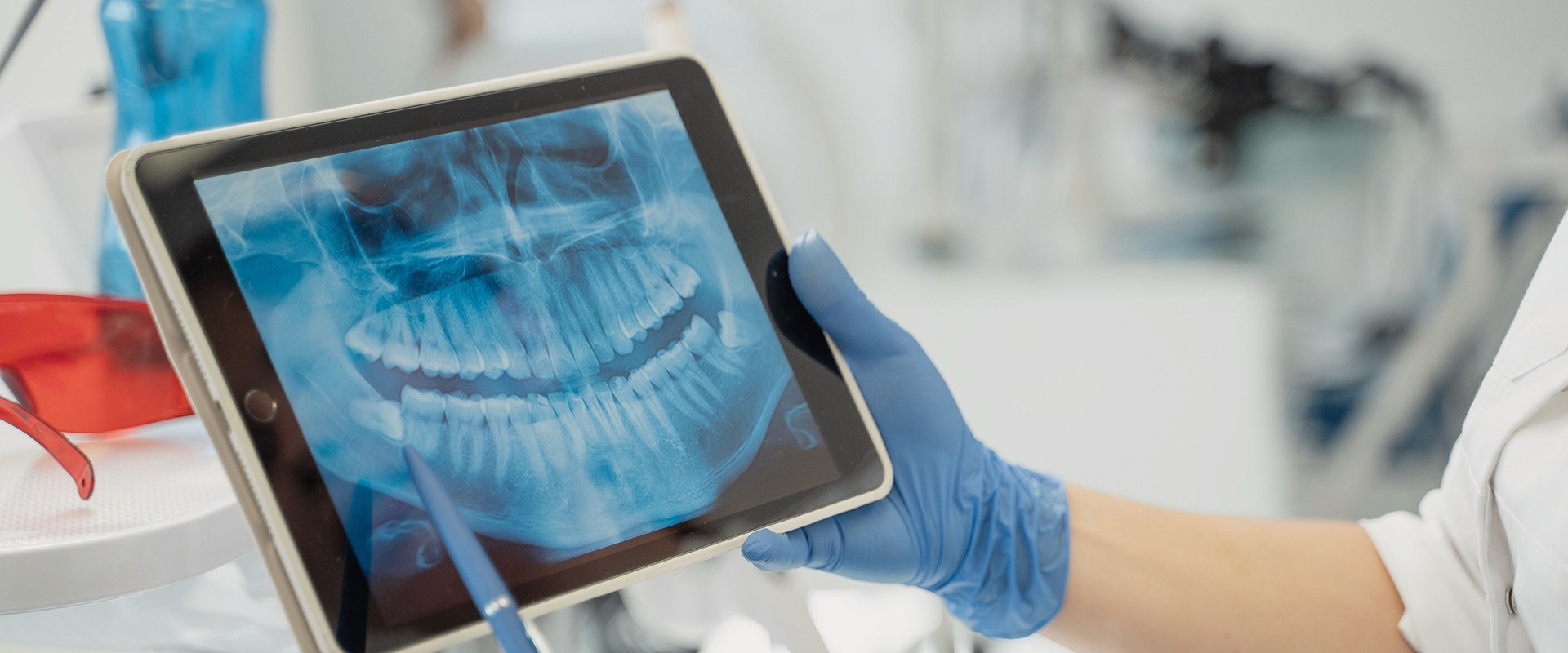
Traditional two-dimensional X-rays, while valuable, have limitations. They provide a flat view that can obscure critical details and may require multiple angles to fully understand a patient's anatomy. Modern 3D imaging—such as Cone Beam Computed Tomography (CBCT)—produces detailed three-dimensional images of your teeth, jawbone, nerves, and surrounding structures with exceptional clarity. These images can be rotated, sliced, and examined from every angle, allowing your dentist to detect issues that would be invisible on traditional X-rays, such as impacted teeth, jaw cysts, tumours, and bone deficiencies.
Best For
Earlier detection of dental issues
More accurate diagnoses
Comprehensive anatomical visualization
Reduced need for repeat imaging
Better treatment outcomes
Understanding the digital dental experience
Walking into a modern dental practice today is notably different from even a decade ago. Digital impressions replace the gag-inducing trays of goopy impression material. Chairside screens display high-resolution images of your teeth, allowing you to see exactly what your dentist sees. Treatment plans are simulated in 3D so you can preview your results before treatment begins. These technologies work together to create a seamless, efficient workflow that benefits both the dental team and the patient. Digital dentistry reduces appointment times, enhances accuracy, and minimizes the need for multiple visits. The experience is more comfortable, transparent, and collaborative, giving patients greater involvement in their care decisions.
Digital dentistry isn't just new technology—it's a better standard of care.
Precision diagnostics with 3D imaging
Traditional two-dimensional X-rays, while valuable, have limitations. They provide a flat view that can obscure critical details and may require multiple angles to fully understand a patient's anatomy. Modern 3D imaging—such as Cone Beam Computed Tomography (CBCT)—produces detailed three-dimensional images of your teeth, jawbone, nerves, and surrounding structures with exceptional clarity. These images can be rotated, sliced, and examined from every angle, allowing your dentist to detect issues that would be invisible on traditional X-rays, such as impacted teeth, jaw cysts, tumours, and bone deficiencies.
Best For
Earlier detection of dental issues
More accurate diagnoses
Comprehensive anatomical visualization
Reduced need for repeat imaging
Better treatment outcomes

Redefine your smile with professional cosmetic dentistry — naturally stunning, built to last.
Redefine your smile with professional cosmetic dentistry — naturally stunning, built to last.
Comfortable digital impressions
Traditional impressions used thick, goopy materials that could trigger gag reflexes and cause anxiety for many patients. Digital intraoral scanners have eliminated this discomfort entirely. Using a handheld wand equipped with advanced optical technology, your dentist can capture thousands of images of your teeth and gums in seconds. These images are seamlessly stitched together to create a highly accurate 3D digital model of your mouth.
Best For
No gag-inducing impression materials
Quick and comfortable process
Greater accuracy and precision
Better-fitting restorations
Reduced anxiety and stress
Same-day restorations with CAD/CAM technology
Historically, receiving a crown, veneer, or bridge required at least two appointments—one for impressions and a temporary restoration, and another weeks later for placement of the permanent restoration. CAD/CAM technology has revolutionized this process. Once your digital impression is complete, computer software designs your restoration with incredible precision. This digital design is then sent to an in-office milling machine that fabricates your crown or veneer from a solid block of ceramic while you wait. The entire process—from scanning to final placement—can often be completed in a single appointment.
Best For
Single-visit treatment
No temporary restorations
Fewer anaesthetic injections
Reduced time commitment
Immediate final results
The future of digital dentistry
Digital dentistry continues to evolve, with emerging technologies promising even more impressive advancements. Artificial intelligence is increasingly used to assist in diagnostics, helping dentists identify cavities, gum disease, and oral pathology with unprecedented accuracy. 3D printing allows for rapid fabrication of surgical guides, aligners, and even temporary or permanent restorations in the office. Teledentistry platforms now enable remote consultations and monitoring, expanding access to dental expertise for underserved populations. As these technologies mature, the future of dentistry promises to be even more precise, efficient, personalized, and accessible. Patients can look forward to treatment experiences that are increasingly comfortable, predictable, and tailored to their individual needs. Choosing a dental practice that embraces digital innovation ensures you receive care that meets the highest standards of modern dentistry.
Comfortable digital impressions
Traditional impressions used thick, goopy materials that could trigger gag reflexes and cause anxiety for many patients. Digital intraoral scanners have eliminated this discomfort entirely. Using a handheld wand equipped with advanced optical technology, your dentist can capture thousands of images of your teeth and gums in seconds. These images are seamlessly stitched together to create a highly accurate 3D digital model of your mouth.
Best For
No gag-inducing impression materials
Quick and comfortable process
Greater accuracy and precision
Better-fitting restorations
Reduced anxiety and stress
Same-day restorations with CAD/CAM technology
Historically, receiving a crown, veneer, or bridge required at least two appointments—one for impressions and a temporary restoration, and another weeks later for placement of the permanent restoration. CAD/CAM technology has revolutionized this process. Once your digital impression is complete, computer software designs your restoration with incredible precision. This digital design is then sent to an in-office milling machine that fabricates your crown or veneer from a solid block of ceramic while you wait. The entire process—from scanning to final placement—can often be completed in a single appointment.
Best For
Single-visit treatment
No temporary restorations
Fewer anaesthetic injections
Reduced time commitment
Immediate final results
The future of digital dentistry
Digital dentistry continues to evolve, with emerging technologies promising even more impressive advancements. Artificial intelligence is increasingly used to assist in diagnostics, helping dentists identify cavities, gum disease, and oral pathology with unprecedented accuracy. 3D printing allows for rapid fabrication of surgical guides, aligners, and even temporary or permanent restorations in the office. Teledentistry platforms now enable remote consultations and monitoring, expanding access to dental expertise for underserved populations. As these technologies mature, the future of dentistry promises to be even more precise, efficient, personalized, and accessible. Patients can look forward to treatment experiences that are increasingly comfortable, predictable, and tailored to their individual needs. Choosing a dental practice that embraces digital innovation ensures you receive care that meets the highest standards of modern dentistry.